기치

Polarizing Optics

Polarizing Optics

  • DUAL BABYNINE-TYPE DEPOLARIZER
    DUAL BABYNINE-TYPE DEPOLARIZER
    Aug 04, 2026
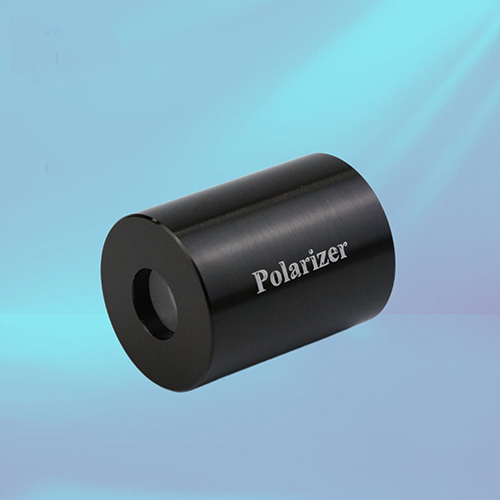
    For a single H-V type depolarizer, it cannot depolarize all polarized light, particularly linearly polarized light in horizontal and vertical orientations, thus limiting its application scope. A single H-V depolarizer can be regarded as a Wollaston prism with an extremely small structural angle. As shown in Figure 1, light is split into light beams o and e in the front half, propagating orthogonally and in the same direction; in the rear half, it is further divided into two beams—oe and eo—which are linearly polarized with opposite refraction directions. The intensities of these two beams vary with the azimuth angle according to sine or cosine laws, typically differing from each other, resulting in significant polarization correlation. Therefore, when using an H-V depolarizer for monochromatic light depolarization, an azimuth angle of 45° is required.   Figure 1   Based on the principle of H-V type depolarizers, two H-V type depolarizers are combined through a 45-degree rotation to form a dual Babynett-type depolarizer, as shown in Figure 2. This design enables the second H-V type depolarizer to effectively depolarize the horizontal or vertical linear polarization components in the first H-V type depolarizer, thereby overcoming the functional limitations of a single H-V type depolarizer.   Figure 2: Structural diagram of the dual Babynine-type depolarizer  
    더 읽어보기

뉴스레터 구독하기

우리는 지속적인 혁신의 원칙을 고수하고 생산 공정과 기술을 지속적으로 개선하며 신제품을 적극적으로 개발해 왔습니다.

메시지를 남겨주세요

메시지를 남겨주세요
당사 제품에 관심이 있고 자세한 내용을 알고 싶으시면 여기에 메시지를 남겨주시면 최대한 빨리 답변해 드리겠습니다.
제출하다

제품

왓츠앱

연락하다